Syllabus
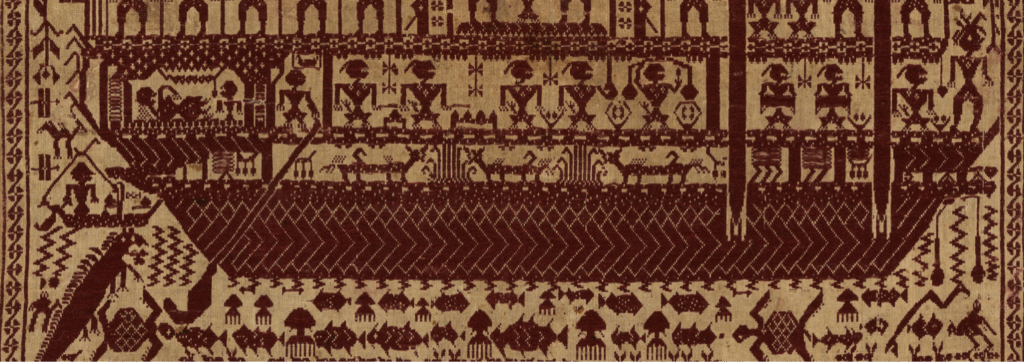
Learn more about this object on the MET’s website by clicking on the image.
Schedule—Spring 2026
Always come to class with a pen or pencil and paper! All assigned readings will be made freely available under the course website’s “Readings” tab.
1/26 Week 1
Introduction and How to Look at a Work of Art
- What does it mean to think with rather than about an object?
- What is art history and what can we do with it?
2/2 Week 2
Space: The Sacred, the Spiritual, the Sanctified
- How has sacred space been contrived across time and place?
2/9 Week 3
Space: Performing Citizenship in Ancient Greece and Rome
- In what spaces did the ancients perform their citizenship civically? What about culturally? Who did the concept of citizenship include and exclude?
- Drawing our own Greek theater masks and reading Sophocles’s Oedipus Rex (c. 429 BCE)
2/16 *NO CLASS. No classes scheduled at CCNY*
2/23 Week 4
Space: The Gothic Middle Ages…on campus?!
- An introduction to Gothic architecture
- Leaving the classroom to begin Assignment 1, weather permitting
3/2 Week 5
Space: Monuments, Memorials, Murals, and the Politics of Public Memory
*ASSIGNMENT 1 DUE*
- How do public spaces inform, and how are they informed by, collective memory? Are memory and history the same thing?
3/9 Week 6
Shape: Material Culture by Sea
- What is material culture and why does it belong in an art history course?
- What are some ways ocean-facing communities have used the materials and motifs of maritime life to tell place-based stories through their everyday objects?
- Practicing visual analysis
3/16 Week 7
Shape: Multi-sensory Objects in Pre-conquest Mesoamerica and the Andes
- What are some ways to engage with a work of art beyond simply looking at it?
- Anatomy of an article exercise: practice mapping out an argument in a short excerpt of an academic text—Eve Sedgwick, Touching Feeling: Affect, Pedagogy, Performativity (Duke University Press, 2002)
- In-class making activity
- A review of how to complete the midterm
- The midterm is due the following week. Go to the MET if you can!
3/23 Week 8
Shape: African Sculpture, Repatriation, and Postcolonial Entanglements
*MIDTERM DUE*
- How has colonialism and its afterlife shaped debates around the repatriation of African sculpture held in Euro-American collections? How can we engage with African sculpture on its own terms within this historical framework?
3/30 Week 9
Shape: Bodies Out of Bounds
- What makes a body transgressive in art history? How might a body exceed its own boundaries?
- In-class book club: Joyce Carole Oates’s short horror story “Monstersister”
4/6 *NO CLASS. Spring Recess*
4/13 Week 10
Surface: Renaissances in the North and South (Europe) and Alt Text as Poetry
- Wait a second, there were two Renaissances in Europe?! What are their different visual traditions?
- What is Alt Text? Who is it for? How is it used in museums and online? How can it be a form of creative description?
4/20 Week 11
Surface: Landscape Painting, Photography, and the Making of American Myths
*ASSIGNMENT 2 DUE*
- How did traditions of painting and photography in the 19th century conspire to promote the “myth of the vanishing Indian” in the United States? What defines “American art history” anyway?
- Annotated images activity
4/27 Week 12
Surface: The (Not So) Daunting “-isms” of the Western Canon
- A survey of European painting styles from Neoclassicism to Cubism and the institutions that facilitated them
- An investigation of how the birth of European modernism(s) is inseparable from Orientalism and Primitivism
5/4 Week 13
Surface: Whose Line Is It Anyway? Riffing on the Line
- How have artists in a global modern context taken up the simplest of marks—the line—as a point of departure for a new visual language?
5/11 Week 14
Beyond Categories: Art as Institutional Critique
Last in-person class!
- How might we trace an (abbreviated) trajectory of art that aims to expose and subvert institutional power structures, including the museum itself, in the twentieth century?
- Some ideas we will consider include: artist as activist, how museums shape meaning, conceptual art, social practice, etc.
- Review of how to complete the final exam
5/18 Week 15
Finals Week
No class held, work on your final and any make-up work. Please do not hesitate to reach out to me if you need help on your finals. I’m always happy to discuss your ideas.
*FINAL DUE by 11:59pm on 5/22 (No late exceptions!)*
*MAKE-UP WORK DUE by 11:59pm on 5/25*
Nuts and Bolts
Course materials, homework, and classwork
This course is a zero-cost course and does not require an expensive textbook. Rather, all required materials will be made freely available to you on the course’s CUNY Academic Commons website or in class. These materials include articles, essays, videos, podcasts, and links to specific objects and are due by the start of class so that our in-class looking and learning is primed with a collective base of knowledge. Some of these texts will be accompanied by reflection prompts that we will address during class.
We meet for nearly 3 hours every week—that’s a long time to spend in a classroom! But it means we can do a lot of learning when we’re together. I will lecture some, but we will also do a lot of dynamic in-class group work, activities, individual reflection, and peer-to-peer learning. I expect everyone to be present and engaged during class. Let’s make the most of our time together and show up for ourselves and for each other the best we can.
How your final grade for the course will be determined
Attendance and participation: 35 points
- Weekly attendance = 20 pts total, and mandatory! (If you do not come to class, you cannot pass this course.)
- Everyone gets 2 excused absences throughout the semester, no questions asked but please give me a heads up. Use these wisely because they are meant to cover illness, unexpected emergencies, etc.
- If you miss 3 classes, you will lose 15 points from your attendance grade.
- If you miss 4 classes, you will receive 0 points for attendance, but you can still pass the class if you come to all other classes, actively participate, and turn in the assignments since I offer a surplus of points to begin with.
- If you miss 5 or more classes, you cannot pass this course because you will have missed too much content.
- If you are experiencing an unexpected hardship that will affect your ability to attend for an extended period of time, please notify me before the classes you will miss so that we can discuss and come up with a fair plan to make up missed work.
- 1 office hours visit = 5 pts
- Participation in class throughout the semester = 10 pts
Assignments: 30 points
- Each assignment = 15 points
- Labor-based for each assignment. If you complete both, you get full credit. If you turn in partial work, you will receive partial credit. I am looking for genuine effort and engagement with ideas.
Midterm: 20 points
- Assessed for a letter grade
Final: 35 points
- Assessed for a letter grade
Final Grade Breakdown:
| A+ | 97-120 points |
| A | 94-96 points |
| A- | 90-93 points |
| B+ | 87-89 points |
| B | 84-86 points |
| B- | 80-83 points |
| C+ | 77-79 points |
| C | 74-76 points |
| C- | 68-73 points |
| D* | *I will not give out any Ds in this class (and I’ll tell you why!) |
| F | Less than 68 points. Course can be retaken to replace grade on transcript. |
| Withdraws | Please consult the CCNY academic calendar for the various withdraw dates (“WD” (Dropped) or “W” (Withdrew Officially) or “WU” (Withdrew Unofficial, participated at least once) |
| Incomplete | The student can take a temporary incomplete and have 1 additional semester to complete missed assignments for a passing grade. Failure to complete the work by the agreed date will result in an automatic conversion to an F. Incompletes will only be assigned in consultation with the professor before the semester has concluded. |
Expectations
On the first day of class we will collaboratively establish class rules and norms, building on the CCNY Student Code of Conduct (see below).
Here are a few things that I think are important, (mostly) open to discussion:
- Device-free class unless specified that we will be using them (no phones, laptops, tablets, etc.) so that we can be fully present and focused in the room together
- No food or drink (except water) are allowed in the classroom by Art Department policy
- Be on time – excessive tardiness will mean fewer points for attendance/participation
- No AI – it’s bad for the environment, for workers, and for our critical thinking!
Student Code of Conduct
All student members of the College community are expected to conduct themselves in a manner that demonstrates mutual respect for the rights and personal/academic well-being of others, preserves the integrity of the social and academic environment, and supports the mission of the College. The College has an inherent right to address behavior that impedes, obstructs, or threatens the maintenance of order and attainment of the aforementioned goals by violating the standards of conduct set forth in the University student conduct policies noted below as well as other policies that may established by the respective Schools, Global Sites, and administrative offices of the University. (Article XV)
The goals of the CCNY Community Standards are:
- To promote a campus environment that supports the overall educational mission of CCNY
- To protect the University community from disruption and harm
- To encourage appropriate standards of individual and group behavior
- To foster ethical values and civic virtues
- To foster personal learning and growth while at the same time holding individuals and groups accountable to the standards of expectations established by the Code of Conduct
Content warning
At times this semester we will be discussing images and events that may be disturbing to some students. If you know that particular topics will be triggering for you, I invite you to come discuss your concerns before they come up in class, or in response to anything that we have covered. If you need to leave the room and take a short break during a challenging topic, please do so.
Academic integrity
Plagiarism is copying and using other people’s words without proper acknowledgment or citation as it is indicated in the CUNY Policy on Academic Integrity. All writing submitted for this course is understood to be your original work written. Plagiarism is unacceptable and has serious consequences that can include a failing grade. In cases where I detect academic dishonesty (the fraudulent submission of another’s work, in whole or part, as your own), you may be subject to a failing grade for the project or the course, and in the worst case, to academic probation or expulsion. AI-generated writing may also be considered dishonest work and will be dealt with accordingly. While AI programs (like ChatGPT) can be useful tools, they can also disrupt the learning goals for certain assignments. As a professor, I may make further inquiries into students’ work processes in order to assess learning and provide feedback. Please ask if you have any questions about using AI in this class. You are expected to read, understand, and adhere to CCNY’s Policy on Academic Integrity.

